
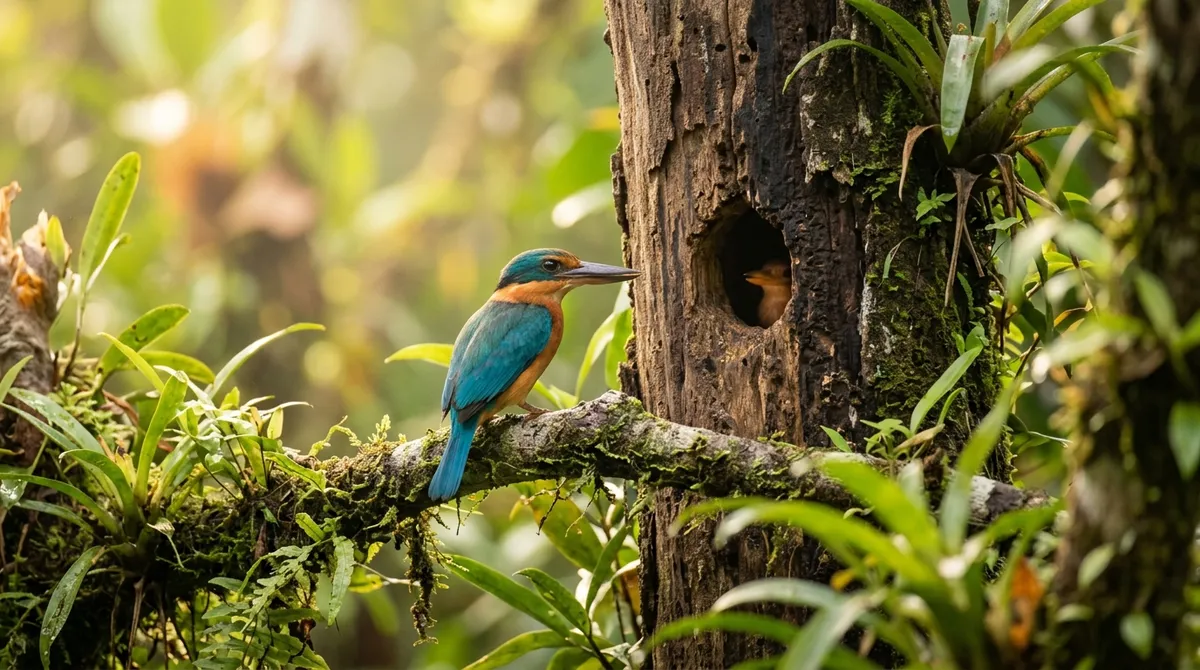
The resurgence of the Guam kingfisher, a bird species once on the brink of extinction, has captured the attention of conservationists worldwide. This critically endangered bird, known for its vibrant plumage, has laid its first egg in the wild in over four decades. This significant event took place thousands of miles from its native habitat, marking a hopeful milestone in the species' recovery efforts.
Once native to the forests of Guam, the kingfisher population faced near extinction due to the invasive brown tree snake. This predator arrived on the island following World War II and drastically reduced the local bird populations. By the late 1980s, the Guam kingfisher had disappeared from the wild, prompting urgent conservation measures.
Conservation Efforts Lead to Success
In response to the threat posed by the brown tree snake, conservationists took the drastic step of capturing the last remaining kingfishers. These birds were placed into a breeding program managed by several zoos in the United States. The program aimed to maintain the genetic diversity and health of the species, ensuring it could one day return to its natural habitat.
Over the years, dedicated efforts by wildlife experts have expanded these breeding populations. The recent laying of an egg is a testament to these efforts, signaling the possibility of reintroducing the species into the wild under controlled conditions.
Reintroduction Programs in Progress
The new egg was laid at a specially designated reserve. This site, although far from Guam, offers a safe, predator-free environment. Here, scientists closely monitor the birds, hoping to establish a sustainable population that can eventually be reintroduced to Guam.
These efforts involve not just breeding but also educating the public about the importance of biodiversity and the impact of invasive species. Through awareness campaigns, conservationists aim to secure funding and support for ongoing projects.
The Role of Technology in Conservation
Advanced technology plays a crucial role in monitoring and managing the Guam kingfisher population. Drones and remote cameras provide real-time data, allowing researchers to track the health and behavior of the birds without disturbing them. This technology aids in ensuring the optimal conditions for breeding and helps in making informed decisions about their care.
Moreover, genetic research is critical. Understanding the genetic makeup of the kingfishers allows scientists to avoid inbreeding and maintain a robust gene pool, crucial for the long-term survival of the species.
Looking to the Future
The ultimate goal of these conservation efforts is to reestablish a stable, self-sustaining population of Guam kingfishers in their native habitat. However, this involves significant challenges, including the eradication of the brown tree snake from Guam.
Collaborative efforts between wildlife organizations, government agencies, and local communities are essential. These collaborations aim to develop a comprehensive strategy to remove invasive species and restore the island's ecosystem. Only through such coordinated action can the dream of seeing the Guam kingfisher back in its homeland become a reality.
Conclusion
The laying of the first wild egg by a Guam kingfisher in over 40 years is a beacon of hope for conservationists. It highlights the resilience of nature and the extraordinary efforts of those dedicated to preserving it. As reintroduction programs progress, the kingfishers' story serves as a reminder of the importance of protecting biodiversity and the delicate balance of ecosystems around the world.