
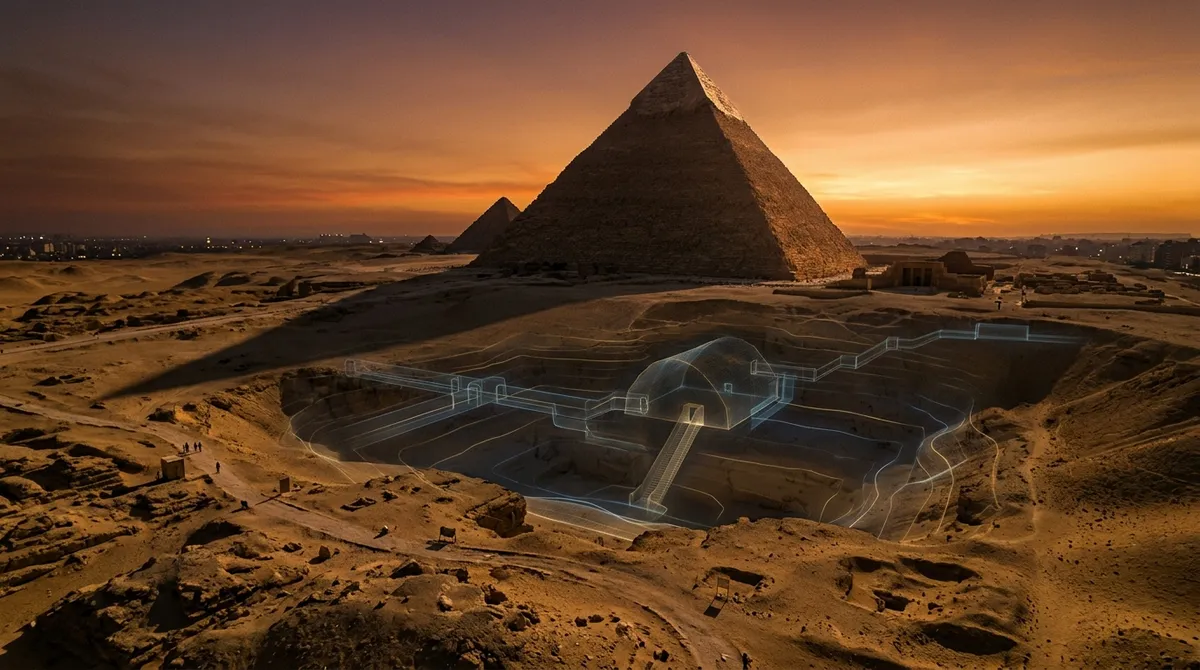
The recent unveiling of new images showcasing massive hidden structures beneath the Pyramid of Khafre has sent ripples throughout the archaeological community. This groundbreaking discovery has been made possible through advanced satellite imaging technology, providing a fresh perspective on one of Egypt's most iconic landmarks.
The Pyramid of Khafre, located on the Giza Plateau, has long been a subject of fascination for historians and archaeologists alike. However, the recent discovery of subterranean structures has added a new layer of mystery to this ancient wonder. The images, which have rapidly circulated on social media, suggest the presence of vast networks beneath the pyramid, prompting a reevaluation of our understanding of Egyptian architecture and engineering.
Implications of the Discovery
The discovery of these structures could offer new insights into the construction methods and purposes of the pyramids. It raises questions about the extent of the underground networks, their original function, and how they were constructed without modern technology. This revelation invites further exploration and could potentially reshape historical narratives about ancient Egypt.
Global Fascination and Future Research
The global community has shown immense interest in these findings, as seen in the widespread sharing of the images. The excitement surrounding this discovery has encouraged calls for more in-depth research and possibly new excavations in the area. Archaeologists hope that future studies will shed light on the purpose of these subterranean spaces and their significance in the context of ancient Egyptian civilization.
The newly released images mark a significant moment in the field of archaeology, underscoring the importance of continued exploration and the utilization of modern technology in uncovering the secrets of the past. As researchers delve deeper, the mysteries of the Pyramid of Khafre and its hidden structures may offer unprecedented insights into one of the world's oldest civilizations.