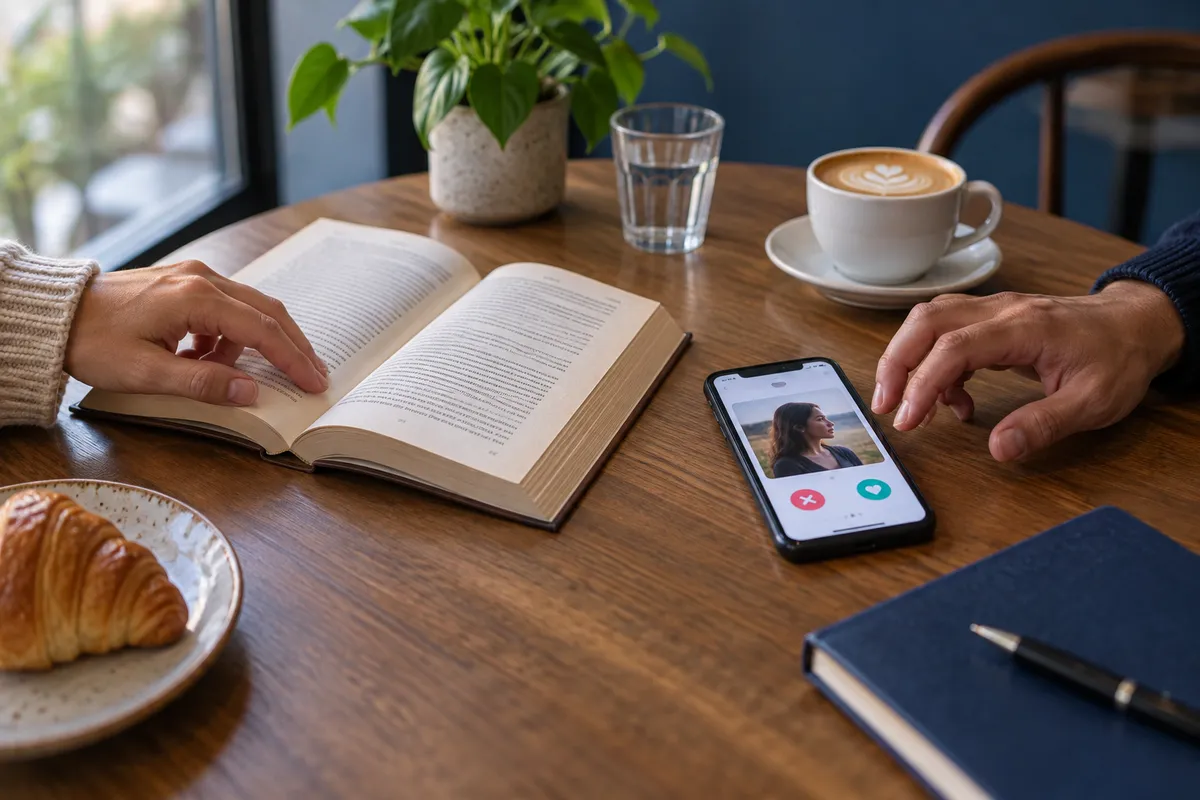
The latest dating deal-breaker may be sitting on your nightstand, or more precisely, not sitting there. Fox News' "The Five" recently took up a Washington Post report suggesting that not reading books has become a new deal-breaker in dating, with literacy and intellectual curiosity acting as modern relationship filters, per Fox News.
We only have the outline of the segment and the report, so this isn't a transcript of who said what. But the premise is plenty to chew on, and it's a juicy one for anyone who has ever swiped on a profile and judged it in under four seconds.
The Premise: Your Reading Life Is Now a Compatibility Signal
According to the Washington Post report as discussed on "The Five," skipping books is being treated as a dating red flag, a shorthand for depth, ambition and compatibility. It fits a broader pattern: dating culture is increasingly shaped by the lifestyle signals, values and identity markers people showcase online. Your taste in music, your gym habits, your travel photos and now, apparently, your reading habits all work as tiny billboards.
That's the news. Here's my take: the interesting part isn't whether books matter, it's that a book has become a signal at all.
Why Books Make Such Good Shorthand
It's hard not to see the appeal. A book is a cheap, quick proxy for things people want but can't easily ask on a first date. Are you curious? Can you sit with a long idea? Do you have interests that don't involve a screen? Nobody wants to open with "describe your inner life," but "read anything good lately?" does the same job in a friendlier outfit.
And pop culture has long agreed. The bookish love interest is a romcom staple, and the tote bag with a literary slogan has been a flirting device for years. (A fair caveat: that's a cultural pattern I'm observing, not something the report claims.)
The Case Against: Is This Just Shelf Snobbery?
Here's where the debate earns its airtime. Treating "doesn't read" as a character flaw has a whiff of intellectual snobbery. A few honest objections:
- Reading isn't the only road to curiosity. Someone can be endlessly inquisitive, funny and thoughtful and still never finish a novel.
- Format wars are real. Does an audiobook count? A long-form podcast? A stack of magazines? The question "does the format matter?" is exactly the kind of fight that makes a dinner table interesting, and nothing in the report settles it for us.
- A bookshelf can be set dressing. Anyone can arrange spines for a profile photo. Owning books and reading them are different hobbies.
That last one is my favorite loophole. If books become a dating filter, expect the same thing that happened to every other signal: people will perform it. Welcome to the era of the strategically placed paperback.
A More Useful Question
Rather than "do you read?", the sharper test might be "what do you do with your curiosity?" The Washington Post framing, as relayed by Fox News, treats books as a stand-in for depth. But a stand-in is just that. If someone can talk with enthusiasm about a podcast, a documentary, a hobby or a rabbit hole they fell down at 2 a.m., that probably tells you what you wanted to know.
That's opinion, not a finding. Still, it points at the real shift: people aren't necessarily demanding a reading list, they're hunting for evidence that a potential partner has an inner life they'd want to spend time with.
So, Red Flag or Not?
If you read and want a partner who does, a filter is a filter. Dating is allowed to be picky, and shared habits make for easy conversation. But treating a lack of reading as an automatic disqualifier risks mistaking one hobby for a whole personality, and the person on the other side of the table may have more going on than their shelf suggests.
The funniest twist in all of this is that a debate about reading drew its fuel from a news report, a TV panel and, presumably, a lot of group chats, which is to say, plenty of people absorbing ideas without cracking a spine. Maybe that's the real answer: the deal-breaker isn't the format, it's having nothing to say when someone asks what you're into.