
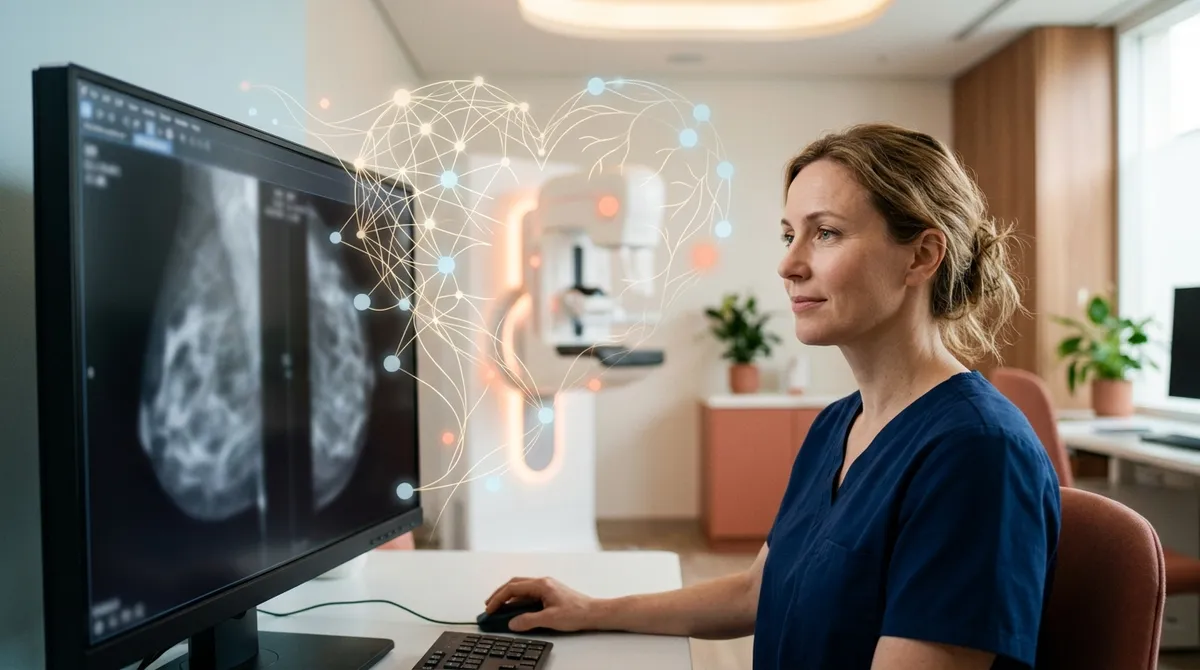
In a groundbreaking advancement, researchers have discovered that routine mammograms, often used for breast cancer screening, can also provide critical insights into heart disease risk. By leveraging artificial intelligence (AI), these screenings can identify signs of heart conditions, offering a dual benefit and potentially saving countless lives.
AI and Mammograms: A New Frontier
Mammograms are a common procedure for detecting breast cancer, typically recommended for women over 40. However, with the integration of AI, these screenings are now revealing more than just signs of cancer. Researchers have developed an AI algorithm capable of analyzing mammogram images to detect calcifications in the arteries, which are indicators of heart disease.
The AI analyses the same images taken during a routine mammogram without requiring additional procedures or radiation exposure. This innovative approach transforms a standard health checkup into a comprehensive screening tool that assesses both breast cancer and heart disease risks.
Understanding the Scientific Breakthrough
The study underlying this discovery involved a large dataset of mammograms. Researchers trained the AI system to recognize patterns associated with arterial calcifications. The results were impressive, with the AI accurately identifying heart disease risk in a significant number of cases. This capability allows for up to a 70% greater detection rate compared to traditional methods.
By focusing on the calcification patterns, the AI can effectively signal when a patient may be at increased risk for cardiovascular issues. This method can be particularly beneficial for women, who might not typically undergo heart disease screening as frequently as men.
Implications for Women's Health
Heart disease is a leading cause of death worldwide, yet its symptoms can often go unnoticed, especially in women. By utilizing mammograms for dual screening purposes, healthcare providers can offer a more comprehensive approach to women's health. Early detection of heart disease can lead to more effective management and treatment options, ultimately reducing the number of heart-related fatalities.
This innovative use of AI in mammography is a significant step towards personalized medicine. It empowers women with crucial information about their health, allowing them to take proactive steps in managing potential risks.
Future Directions and Potential Benefits
The success of this AI application in mammograms opens the door to numerous possibilities in medical diagnostics. As the technology evolves, we may see similar applications across different types of medical imaging. This could revolutionize the way healthcare providers approach disease prevention and management.
Moreover, integrating AI into routine screenings aligns with the growing trend of precision medicine. It enables more tailored and effective healthcare strategies, fostering better patient outcomes and potentially reducing the overall burden on healthcare systems.
Conclusion
The integration of AI into routine mammograms marks a significant advancement in medical diagnostics, offering a powerful tool for early detection of heart disease. This innovation not only enhances the value of mammograms but also underscores the potential of AI in transforming healthcare. As research continues, the hope is that such technologies will become standard practice, helping to save lives and improve health outcomes globally.